Pages

A universe of beauty, mystery and wonder

A universe of beauty, mystery and wonder
©http://ottersandsciencenews.blogspot.ca/ UNAUTHORIZED USE AND/OR DUPLICATION OF THIS BLOG'S MATERIAL IS STRICTLY PROHIBITED. EXCERPTS AND LINKS MAY BE USED, PROVIDED THAT FULL AND CLEAR CREDIT IS GIVEN TO OTTERS AND SCIENCE NEWS BLOGSPOT WITH APPROPRIATE AND SPECIFIC DIRECTION TO THE ORIGINAL CONTENT. --- THE FACTS AND OPINIONS POSTED ON THIS BLOG ARE HERE FOR INFORMATIONAL PURPOSE AND DO NOT NECESSARILY REFLECT THE VIEWS AND OPINIONS OF THIS BLOG'S ADMINISTRATOR.
Showing posts with label Preparedness. Show all posts

Friday, December 22, 2017

HOW TO DRIVE AWAY FROM CATASTROPHE - Preparing a good bug out plan - And see list of the 50 BEST PREPPER WEBSITES

©http://ottersandsciencenews.blogspot.ca/. Unauthorized duplication of this blog's material is prohibited.   Excerpts and links may be used, provided that full credit and link is given to Otters and Science News Blogspot.  Link to this post:  http://ottersandsciencenews.blogspot.ca/2017/12/how-to-drive-away-from-catastrophe.html - Thank you for visiting my blog.
~~~~~~~~~~~~~~~~~~~~~~~~~~~~~~~~~~~~~~


  • 2017 was a year of one catastrophe after another in the USA - by floods, fire, hurricane winds, and more.   One common reoccurrence, particularly during wildfires, is the sight of motorists trapped in traffic jams, as everyone tries to escape disaster at the same time.  
  • The following article by The Survivalist Blog outlines preparations for alternative escape routes BEFORE disaster strikes, and the need for a dry run. 
  • One item you'll need that is rarely mentioned is a gun and plenty of ammunition to protect your family, whether you shelter in place or try to escape. 
  • Another item is plenty of cash.  In some types of disasters neither access to cash machines nor payment by credit card may be possible.
 
How to Develop a Bug Out Route
 
  • In order to decide when you need to bug out, where you’re bugging out to and all of the other considerations, you need to have a disaster plan. In the disaster plan you should have at least a few different bug out locations to choose from. If bug out location A is compromised, then go to bug out location B and so on.
  • The mock bug out (dry run) is so important to the overall planning and creation process. You can write a plan all day long, but until you’ve actually run the route to your bug out location(s) then you won’t know what you’re up against when the time comes to really bug out.
Continue reading

Friday, December 8, 2017

ANIMAL LIVES MATTER - PEOPLE CONTINUE TO ABANDON THEIR ANIMALS DURING DISASTERS - There is NO preparation, NO plan for rescue, NOTHING - Animals are left to die

©http://ottersandsciencenews.blogspot.ca/. Unauthorized duplication of this blog's material is prohibited.   Excerpts and links may be used, provided that full credit and link is given to Otters and Science News Blogspot.  Link to this post:  http://ottersandsciencenews.blogspot.ca/2017/12/animal-lives-matter-people-continue-to.html - Thank you for visiting my blog.
~~~~~~~~~~~~~~~~~~~~~~~~~~~~~~~~~~~~~~
Ventura: In Ventura on Thursday morning, fire fighters continued to battle the ongoing Thomas fire which has so far covered 96,000 acres. Two fire fighters are pictured extinguishing its flames along the 101 Highway
Catastrophes happen several times a year,
but we have NO PLAN to save animals. 
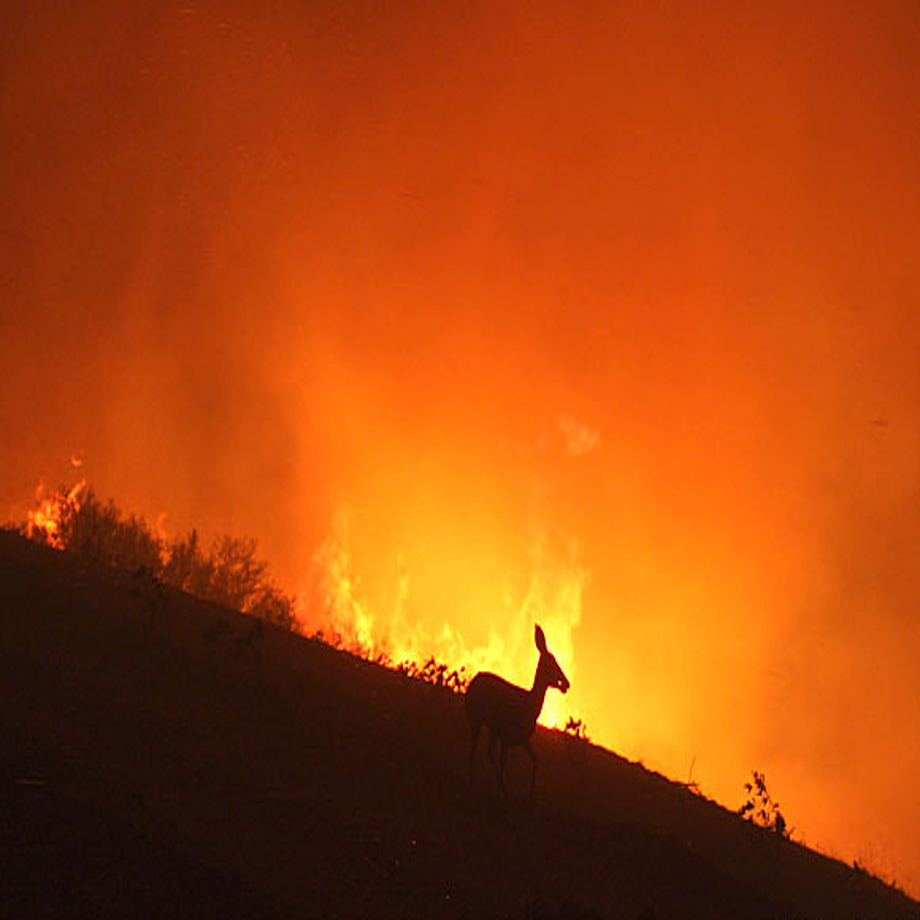
  • It happens with heartbreaking regularity.  Whether floods or fires, people abandon their pets and other animals to their fate.  
  • This year alone there have been several hurricanes and major wildfires, and yet, there is no national plan to deal with the most helpless victims:  domestic animals.
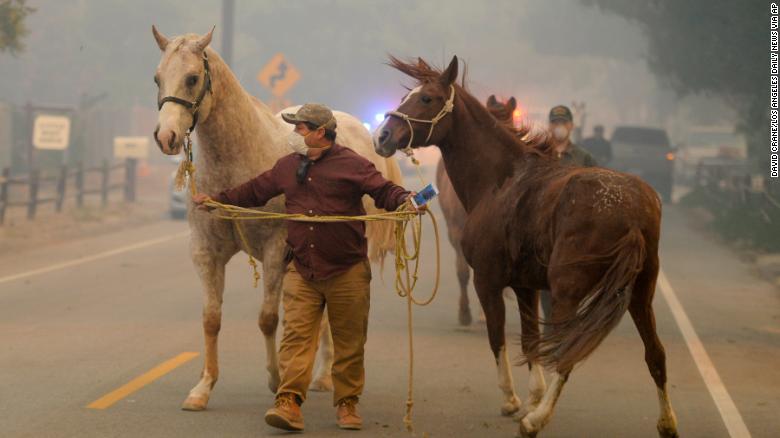
  • If you live in a fire- or flood- or hurricane-prone zone, you know that the time may come when you'll only have seconds to get into your car and flee, not enough to get your pet or to release your horses and other animals.  
  • You may have an evacuation plan for you and your loved ones, but animals are often not even listed on emergency lists. 
  • While cats, dogs, and other small pets can be placed in carriers and taken along, larger animals face a more difficult challenge. 
  • I don't know what the cattle industry or horse owners think would be the best way to give animals a chance for survival, but SOMETHING MUST BE DONE!   
  • Some have suggested a dedicated organization that would operate regionally to evacuate and relocate animals as a precaution long before the danger to rescuers becomes insurmountable.   
  • They would have trucks and drivers available, with additional ones borrowed from non-affected regions, in order to transport the animals to safety.  
  • In the case of pets left behind, there could also be a reliable organization that could be tasked with rescuing those left behind by their panicked owners.  
  • Hundreds of horses and other domestic animals have died horrible deaths burning alive in these southern California fires because their owners left them locked in their barns.  See the horrible aftermath in images by the Daily Mail.   
 
Animal owners have the SACRED TASK of caring for animals in their charge. 
 
ANIMALS LIVES MATTER


HORSES LEFT TO DIE AT PADILLA RANCH IN SYLMAR
  • The Padilla Ranch in Sylmar was torched by the Creek wildfire in the early hours of Tuesday morning
  • Almost half of the 60 horses which are boarded on the ranch perished as the flames took hold 
  • The ranch owners live nearby but were forced to evacuate their homes and leave the area.  The returned on Wednesday to find 29 carcasses and others which survived but were badly burned
  • Creek is just one of five devastating wildfires which continues to ravage Southern California

  • Continue reading, including PETA's tips for evacuating with pets

    Tuesday, November 29, 2016

    SCIENTIST SAYS CHANCES ARE VERY HIGH THAT A MAJOR SOLAR FLARE HITTING EARTH WILL WIPE OUT ALL TECHNOLOGY AND CIVILIZATION - Starvation and social chaos will ensue - Nuclear power plants will go into meltdown - The similar effects from an EMP weapon

    ©http://ottersandsciencenews.blogspot.ca/. Unauthorized duplication of this blog's material is prohibited.   Excerpts and links may be used, provided that full credit and link is given to Otters and Science News Blogspot.  Link to this post:  http://ottersandsciencenews.blogspot.ca/2016/11/scientist-says-chances-are-very-high.html - Thank you for visiting my blog.
    ~~~~~~~~~~~~~~~~~~~~~~~~~~~~~~~~~~~~~~
    WATCH NASA Magnificent Solar Eruption:
     
    • Scientist says chances of a catastrophic effects from a major solar flare hitting Earth are very high.
    • It would wipe out the electric grid and all electronics
    • This would result in the end of civilization as we know it.
    • satelliteAll electronics would be fried:  from computers to bank machines to medical devices to satellites.
    • Transportation, food processing and distribution, water treatment, just about everything we take for granted would be permanently and severely disrupted.
    • Starvation would turn civilized people into savages, fighting for every morsel of food available.  Armed criminal gangs would roam the cities and the countryside.
    • The worst and more lasting effects would be when nuclear power plants would go into meltdown, since they require outside electricity to function.  The radioactive poisoning of large areas of the continent would kill all life, including humans.
    • The United States has NO CONTINGENCY PLAN in place to deal with either the immediate effects of a major solar flare, such as the loss of the electric grid, or the social chaos that would ensue.  None whatsoever, although the government knows that millions would die.
    • A major solar flare could hit Earth any day.  The Carrington Event in 1859 caused hardly a ripple because civilization did not depend on electronics yet.  Life went on as usual.
    • Many major solar flares occur all the time and so far they have been directed away from Earth.  But our luck won't last forever, and we are not prepared. 
    • Similar to a solar flare in its effects would be a nuclear bomb detonated above the United States, which would also fry the electric grid and all electronics.  
    • Solar flares and a nuclear attack of that sort are called electromagnetic pulse events, or EMPs. 
    Continue reading, including suggestions for preparedness

    Wednesday, December 30, 2015

    WHAT EARTHQUAKE EXPERTS DON'T LIKE TO TELL YOU - Although the West Coast would be obliterated in a mega-earthquake, experts never mention the subsequent MELTDOWN OF NUCLEAR POWER PLANTS from long-term electric power failure, which would kill the survivors - This nuclear scenario would also occur after a major EMP event caused by terror or a giant solar flare

    ©http://ottersandsciencenews.blogspot.ca/. Unauthorized duplication of this blog's material is prohibited.   Excerpts and links may be used, provided that full credit and link is given to Otters and Science News Blogspot.  Link to this post:  http://ottersandsciencenews.blogspot.ca/2015/12/what-earthquake-experts-dont-like-to.html - Thank you for visiting my blog.
    ~~~~~~~~~~~~~~~~~~~~~~~~~~~~~~~~~~~~~~ 
    The following article fails to mention three important things.
     
    1)  The most dangerous effect of a disaster will be the failure and meltdown of the several nuclear power plants in the area affected.   Power failure as a result of a major earthquake, or an electromagnetic pulse (EMP) event caused by a major solar flare or by a deliberate terror attack, would fry the electric grid indefinitely.  A major EMP event, by the way, is also not just a matter of if, but when.  It's going to happen sometime.  It will take us back to the stone age. 
     
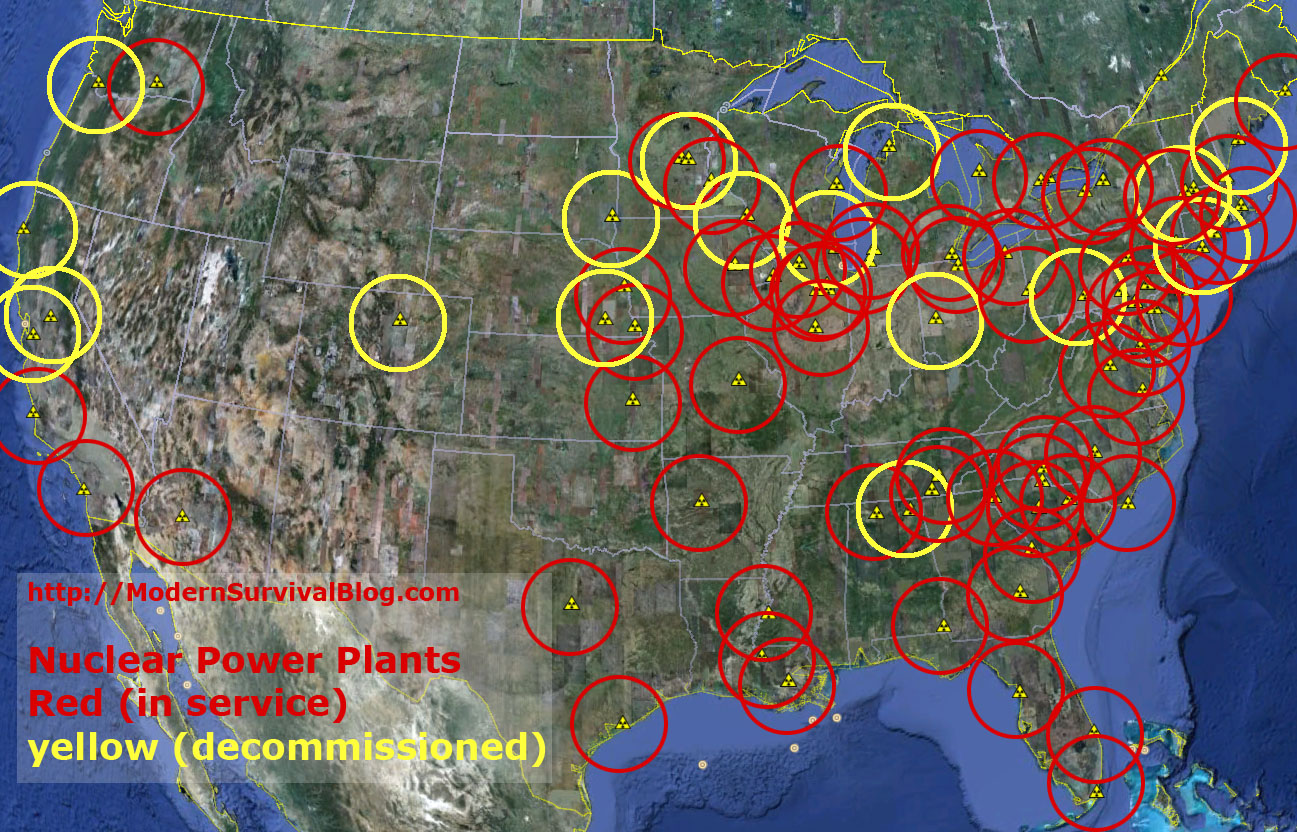
      Map of nuclear power plants:
    http://modernsurvivalblog.com/nuclear/u-s-nuclear-power-plants-safe-distance/
    Never mind what an earthquake or an EMP event would do to society - considering the immediate lack of food, transportation, water, and other necessities.  After all, everything runs on computers these days. 
     
    The worst part will be the meltdown of nuclear power plants as a result of long-term lack of electric power to run the machinery, contaminating large swaths of land and killing off the survivors.  This, for some obscure reason, is never mentioned.  Please see references for this nightmare scenario at the bottom of this page.
     
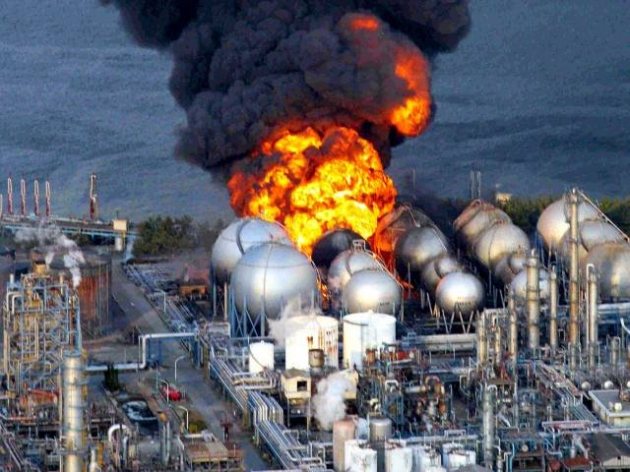
    Fukushima on fire
    Japan, one of the best prepared countries in the world for earthquakes and tsunamis, saw their FUKUSHIMA nuclear plant go into meltdown.  To this days, years after their disaster, they are still unable to take control of the situation, so they keep dumping heavily radioactive waste into the Pacific Ocean. 
     
    And that was only one nuclear power plant.  Imagine how the US and Canada would be completely overwhelmed to even protect one of the many nuclear power plants in the region.   Nuclear waste storage areas such as the infamous Hanford, would simply spill their poison all over rivers, air and land.   
     
    The East Coast is not safe either.  There are volcanoes in the Atlantic that are ticking bombs, such as El Hierro in the Canary Islands.  An eruption could unleash a major tsunami that would engulf the US/Canada East Coast - and their nuclear power plants.
     
    Katrina survivors
    2)  Be skeptical of all estimates of government help plans and timelines.  In this century alone we have witnessed at least two major failures to properly react to two manageable disasters:  the Katrina and Sandy hurricanes.  It took authorities many days, even weeks, to give basic assistance to survivors, and when they did, it was in grossly ineffective ways.  YOU ARE ON YOUR OWN.
     
    3)  Aside from the usual list of necessities, a gun or two with plenty of ammunition would be very helpful to protect your family.  In cases of protracted crises all social norms tend to break down.  Bad people will behave badly, and good people will too, when hungry and scared.   US and Canada demographics are changing constantly.  You no longer know your neighbors.   
     
     
    Scene from film "2012"
     
     
    The Really Big One
    An earthquake will destroy a sizable portion
     of the coastal Northwest. The question is when.
     
    By Kathryn Schultz, The New Yorker Magazine 

    Some key points:
    • When the next very big earthquake hits, the northwest edge of the continent, from California to Canada and the continental shelf to the Cascades, will drop by as much as six feet and rebound thirty to a hundred feet to the west—losing, within minutes, all the elevation and compression it has gained over centuries.
    • Some of that shift will take place beneath the ocean, displacing a colossal quantity of seawater.
    • By the time the shaking has ceased and the tsunami has receded, the region will be unrecognizable.
    • When the next full-margin rupture happens, that region will suffer the worst natural disaster in the history of North America.

    Continue reading, and see links to related articles on the risk of nuclear power plant meltdowns

    Tuesday, January 6, 2015

    SAILOR GUTZLER, THE SEVEN YEAR OLD SURVIVOR OF PLANE CRASH IN KENTUCKY, HAD SURVIVAL TRAINING

    daily life©http://ottersandsciencenews.blogspot.ca/. Unauthorized duplication of this blog's material is prohibited.   Excerpts and links may be used, provided that full credit and link is given to Otters and Science News Blogspot.  Link to this post:  http://ottersandsciencenews.blogspot.ca/2015/01/sailor-gutzler-seven-year-old-survivor.html - Thank you for visiting my blog.
    ~~~~~~~~~~~~~~~~~~~~~~~~~~~~~~~~
    • Sailor Gutzler walked away from a plane crash that killed her parents, sister and cousin.
    • Her father, a pilot, taught her survival skills.
    • With only a t-shirt and shorts on, no shoes, and a broken wrist, she tried to make a torch.
    • Unable to do so she went for help, after trying in vain to revive her parents
    • She walked nearly a mile in the middle of the night through a thorny and cold Kentucky forest to find help.
    • Finally she sighted a light in the distance and found a house. 
    'Her voice was quivering': When police arrived, Sailor was so shaken she didn't make any sense
    Sailor Gutzler -  You can't stop me
    Relatives told NBC News that 7-year-old Sailor Gutzler, who walked away from a Kentucky plane crash that killed four family members, used survival skills learned from her father to make her way safely to a home nearly a mile away from the crash site. 

    Her father, Marty Gutzler, was a flight instructor. A pilot for 30 years who had taught his kids survival skills. Sailor had apparently paid close attention because relatives say she used the plane’s burning wing to light a branch to find her way out of the dark woods,” NBC’s Gabe Gutierrez reported.
     
    Before she struggled through the thick brush, the child tried to wake up her dead relatives, thinking they might be asleep.
     
    Sailor tried to rouse the family members to no avail. She told Larry Wilkins, whose door she ended up at after her desperate walk to safety, but they 'wouldn't wake up', according to ABC News.

    The second grader, who had a broken bone in her wrist, freed herself from the plane that came to rest upside-down in a densely wooded area, wearing shorts and a t-shirt and missing her shoes and one sock.

    Wednesday, September 10, 2014

    YOUR PET EMERGENCY EVACUATION PLAN AND SUPPLY LIST - Be well prepared to take your pets along with you

    702143_71077717
    You probably already have a family emergency kit put together with all of the essentials that you and your family would need in case of a emergency. But did you include your pets?

    Here is a list of items that you should have in your pet emergency kit:
    • Food: Make sure that you have at least enough food for one week. Most agencies suggest three days but, as we discovered with Hurricane Katrina, three days is not enough. Bring the food they are used to eating and keep it in a waterproof container. Don’t forget a bowl to feed them in and a manual can opener.

    Wednesday, February 19, 2014

    PREPPING FOR DISASTERS - GUIDELINES - HALF PREPPING EQUALS NO PREPPING


    The following article by Brandon Turbeville of Activist Post gives us a small glimpse into what the world will look like when crisis strikes.
    As a survivor of the Icepocalypse that recently gripped much of the South in crippling power outages and freezing temperatures, at least three lessons can be deduced from the experience.
    1. A very small minority of people are equipped to deal with an emergency in a competent fashion.
    2. A slightly larger number of people attempt to be prepared but fall short if the emergency persists.
    3. The vast majority of people are wholly unprepared for even a slight disturbance in their usual routine or living conditions.
    While this statement may come as basic common sense to the majority of my usual readers, such observations do bear repeating. Indeed, it is important to remind ourselves of just how unprepared we may be, even though we may be more prepared than most of the rest of the population.

    Wednesday, January 22, 2014

    WEST VIRGINIA DISASTER - STORES WERE EMPTIED WITHIN AN HOUR - ARE YOU PREPARED?


    By Mac Slavo,  SHTFplan.com

    When toxic chemicals spilled into the Elk River in Charleston, West Virginia a couple of weeks ago we got another glimpse into what the world might look like in the aftermath of a major, widespread disaster.  There were several lessons we can take from this regional emergency and all of them are pretty much exactly what you might expect would happen when the water supplies for 300,000 people become suddenly unavailable.

    Lesson #1: There will be immediate panic

    Monday, November 18, 2013

    US GOVERNMENT DISTURBING ADMISSION - WE'RE NOT MILITARILY READY FOR BATTLE

     
    Senior House lawmakers sounded the alarm over what they say is the U.S. military’s lack of preparedness for battle following a classified briefing Thursday on how deepening budget cuts are impacting troop readiness.
     
    Continuing cuts to the nation’s defense budget have left U.S. troops underprepared for battle, according to House Armed Services Committee Chair Howard “Buck” McKeon (R., Calif.) and Readiness Subcommittee Chairman Rob Wittman (R., Va.), who briefed reporters following a classified briefing with top military brass.
     
    The briefing—one in a series that will be held over the next weeks—was aimed at convincing members of Congress to fight against further defense cuts as next year’s federal budgeting process gets underway.
     
    The brief was led by Brigadier General Martin Schweitzer and Dr. Laura Junor, a deputy assistant secretary of defense for readiness.
     
    Military leaders from all branches of the service have increasingly spoken out in recent months about how the budget crisis is impacting readiness and their ability to carry out missions.


    Read more -
    http://freebeacon.com/lawmakers-u-s-troops-unprepared-to-deploy/
     

    US readiness in jeopardy as war pilots flee - Text and video
    http://www.wnd.com/2013/11/u-s-war-readiness-in-jeopardy-as-air-force-pilots-flee/

    ~~~~~~~~~~~~~~~~~

    RELATED


    White House purges top military - 200 officers so far.
    http://www.wnd.com/2013/11/obama-building-compliant-officer-class/ 


    Pentagon and CIA trying to stop White House approval for Russian monitoring stations on US soil -  http://www.nytimes.com/2013/11/17/world/europe/a-russian-gps-using-us-soil-stirs-spy-fears.html?ref=centralintelligenceagency&_r=0


    US emergency planners also unprepared for a major catastrophe, such as an EMP event
    http://www.wnd.com/2013/11/emergency-planners-unprepared-for-catastrophe/

    ********************************************************************************


    Sunday, February 24, 2013

    WHY NOT ENOUGH EFFORTS TO PROTECT US FROM BIG ASTEROID IMPACTS?

    daily life©http://ottersandsciencenews.blogspot.ca/. Unauthorized duplication of this blog's material is prohibited.   Excerpts and links may be used, provided that full credit and link is given to Otters and Science News Blogspot. 
    Link to this post:  http://ottersandsciencenews.blogspot.ca/2013/02/disaster-news-why-not-enough-efforts-to.html - Thank you for visiting my blog.
    ~~~~~~~~~~~~~~~~~~~~~~~~~~~~~~~~~~~~~


    While authorities micromanage your life telling you what to eat, and in what amounts, they seem oblivious to REAL DANGERS to life on Earth.  Aside from rampant toxic pollution, we also have to worry about the odd asteroid or mega-meteor headed for us that could obliterate life.  Our fearless leaders still haven't figured out how to spot them on time - let alone how to divert them from Earth.
    ~~~~~~~~~~~

    In 1992, a congressional study named the Spaceguard Survey Report recommended that NASA find 90 percent of all near-Earth asteroids more than 1 kilometer in size within 10 years, a goal mandated by Congress six years later.

    In 2005, the target was redefined to spotting 90 percent of objects 140 meters or larger. Perennially underfunded, the project last year received less than half of the money it needed to complete its task.

    But since the Chelyabinsk event, members of Congress from both parties have written statements and op-eds rallying greater support for these efforts.  Unfortunately, U.S. legislators are preoccupied with other issues for the time being.

    Budgetary squabbles may lead the country to gut a significant portion of national spending as part of the sequester, including NASA funding.  WIRED.COM


    Trail left by meteor in Russia, February 15, 2013


    Wired magazine:  In the wake of Earth’s largest meteor strike in more than a century, the world’s attention has turned skyward.
     
    The 17-meter bolide exploded in the air over the Chelyabinsk region of Russia on Feb. 15, shattering windows and injuring around 1,000 people. But had the meteor come in at a slightly different angle, the space rock could have impacted the ground and the fallout could have been much worse.
     
    More money is already flowing toward future asteroid detection and mitigation strategies, but we may never be able to fully protect ourselves.
     
    There are plenty of programs already in place for monitoring relatively large near-Earth objects, and more will be coming online soon, both from government space agencies and the private sector.
     
    However, even the best efforts will not be able to catch objects the size of the Chelyabinsk meteor — rocks that are small enough to evade detection by current technology until they are streaking through Earth’s atmosphere, but large enough to be dangerous.
     
    The technology to actually stop any killer asteroids that we do manage to detect is also far in the future. Many techniques have been proposed, including using nuclear missileslaser beams, or even spray paint, but none are proven or anywhere near becoming reality. A lot more research and development as well as an unprecedented international effort will be needed before we can even begin to be protected.
    But we’re working on it.

    Certain scientists and members of the spaceflight community have long and vocally advocated for better methods to track potentially dangerous objects and more funding for mitigation research.
     
    But the odds have always been small and attention to this potential natural disaster has mostly been on the back burner. The probability remains the same — Chelyabinsk-like events tend to occur between once every 10 years to once every century — yet now people’s attention has been refocused.
     
    Simply looking for potentially hazardous asteroids is one of the most important parts of this effort, said physicist and former astronaut Ed Lu, who helped found the B612 Foundation, a private non-profit dedicated to spotting dangerous objects from space.
     
    Asteroid orbits can be easily estimated once they’re spotted, potentially giving years or even decades of advanced warning to civilization. Astronomers already know of more than 400,000 asteroids, of which 6,500 pass near the Earth, but there are many gaps and uncharted objects that could still pose a danger.
     
    “How stupid if we got hit because we weren’t looking?” said Lu. “That seems crazy to me.”
     
    In 1992, a congressional study named the Spaceguard Survey Report recommended that NASA find 90 percent of all near-Earth asteroids more than 1 kilometer in size within 10 years, a goal mandated by Congress six years later. In 2005, the target was redefined to spotting 90 percent of objects 140 meters or larger.
     
    Perennially underfunded, the project last year received less than half of the money it needed to complete its task. But since the Chelyabinsk event, members of Congress from both parties have written statements and op-eds rallying greater support for these efforts.
     
    Unfortunately, U.S. legislators are preoccupied with other issues for the time being. Budgetary squabbles may lead the country to gut a significant portion of national spending as part of the sequester, including NASA funding.
     
    While no new money is likely to be coming to asteroid-spotting activities, the Russian strike may cause “a shift in priorities to looking at this more than we have at the past,” said space policy expert Henry Hertzfeld of George Washington University.
     
    Many ground-based telescopes are already actively watching the heavens, most coordinated through NASA’s Spaceguard program. These include the Catalina Sky Survey, the U.K. Spaceguard Centre, and the Japanese Spaceguard Association. A similar undertaking from the European Space Agency, the Space Situational Awareness program, works with amateur astronomers to monitor dangers from above, including near-Earth asteroids.
     
    A new endeavor coming online in 2015 named the Asteroid Terrestrial-impact Last Alert System Project (ATLAS) will provide an early warning system that could provide one week’s notice for city-destroying 45-meter asteroids and three week’s notice for potentially devastating 140-meter objects.
     
    But the next and most important frontier is watching from space. By sheer coincidence, a Canadian Space Agency project that started in 2008 is scheduled to launch on Feb. 25. Named the Near-Earth Object Surveillance Satellite (NEOSSat), this suitcase-sized spacecraft will circle the planet every 100 minutes, scanning space for asteroids that may someday pass near the Earth.
     
    Being in space means that NEOSSat will solve one of the main problems with current asteroid-watching techniques: You can’t do them during the day. A telescope aimed at the sky when the sun is up will see nothing other than bright sunlight. This is the reason the Chelyabinsk meteor went unnoticed — it came in from the dayside of our planet. The NEOSSat project will begin operation shortly after launch and look for some of the most dangerous objects larger than half a kilometer.
     
    Even more robust space-based telescopes are now being readied by the private sector. Planetary Resources, Inc., a company that aims to mine asteroids, intends to launch a small telescope named the Arkyd-100 that will sit in low-Earth orbit and scan for nearby space rocks.
     
    Though its primary goal will be to find valuable asteroids, the spacecraft will be able to watch for possibly dangerous objects coming from the sunlit side of Earth. Arkyd-100 is expected to launch in 18 to 20 months.
     
    A more targeted effort comes from the B612 Foundation, which plans to launch the Sentinel telescope in late 2016. This spacecraft would sit inside the orbit of Venus and constantly be on the lookout for killer asteroids, whichever direction they come from. Sentinel will spot nearly all asteroids 150 meters or larger and identify a significant portion of those down to 30 meters in diameter.
     
    With a price tag of several hundreds of millions, the project is comparable to a large municipal undertaking like a new highway overpass. But it is still much more than anything accomplished by a private non-profit in space and so there has been some doubt whether or not B612 could wrangle enough people into backing their idea. Since Chelyabinsk, their telescope is on surer footing.
     
    “There’s been a crush of people contacting us,” said Lu. “Suddenly it’s on everyone’s mind.”
    Online donations have increased tenfold, he added. While most of these are fairly small, generally around $100, many richer potential donors who were sitting on the fence have now fully signed on to the company’s plans. Entrepreneur Peter Diamandis, co-founder of Planetary Resources, reported a similar effect with investors who were previously hesitant but are now more willing to back in their venture.
     
    Should one of these telescope projects one day spot a doomsday asteroid, there are already many proposals for how to deflect the object. The method most favored by the B612 Foundation is fairly simple – place a modest-size spaceship near the asteroid and have its gravitational pull slowly alter the object’s course, averting catastrophe. The technique is relatively low cost and would certainly work but would require several years or possibly decades of advanced notice.
     
    For a large rock that’s headed right for us fairly quickly, B612 recommends smashing a giant projectile into the asteroid. This kinetic impactor would provide a strong kick to shuffle an asteroid off its current trajectory. Later, a gravity tractor could be used to make any more precise changes necessary.
     
    It is still unknown exactly what the worldwide reaction will be to a known dangerous asteroid. Actual physical research into asteroid mitigation techniques has been pretty much nonexistent.
    Most likely, asteroid mitigation efforts will be an international undertaking.
     
    Any particular city or country has only a small chance of being hit, though the countries with some of the largest land area, the U.S. and Russia, are also those with the most advanced space programs. It would be in everyone’s best interest to ward off the attack, perhaps providing something akin to a common enemy, suggested Hertzfeld.
     
    Source
     
    RELATED

    NORMALCY BIAS - The normalcy bias, or normality bias, refers to a mental state people enter when facing a disaster.

    It causes people to underestimate both the possibility of a disaster occurring and its possible effects. 

    This often results in situations where people fail to adequately prepare for a disaster, and on a larger scale, the failure of governments to include the populace in its disaster preparations.

    The assumption that is made in the case of the normalcy bias is that since a disaster never has occurred then it never will occur.

    http://en.wikipedia.org/wiki/Normalcy_bias

    *******************************************************************************