©http://ottersandsciencenews.blogspot.ca/. Unauthorized duplication of this blog's material is prohibited. Excerpts and links may be used, provided that full credit and link is given to Otters and Science News Blogspot. Link to this post: http://ottersandsciencenews.blogspot.ca/2015/05/book-bits-seveneves-novel-about-blowing.html - Thank you for visiting my blog.
~~~~~~~~~~~~~~~~~~~~~~~~~~~~~~~~~~~~~~

Chunks of moon destroy the Earth in Seveneaves. Photograph: Alamy
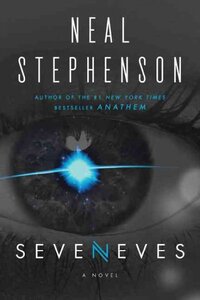
Although I haven't read the just-released Neil Stephenson's book Seveneaves, the plot of his novel is intriguing enough to speculate on what would Earth be without its Moon - This without any modern apocalyptic disaster that would blow it up into pieces. Just the physics of an Earth without the Moon.
So, after reading an outline of the plot, read what real scientists have to say about what our planet would be like if there was no Moon, and the effect on climate, geology, tides, and so on.
On this page:
- The fiction: Excerpts of reviews of Seveneaves
- The science: What would Earth be like if there was no Moon.
- Link to article on what would happen if the Earth stopped turning.
THE FICTION:
Steven Poole of the Guardian writes:
 The story begins with admirable rhetorical swagger: “The moon blew up without warning and for no apparent reason.” Something – perhaps a tiny black hole – has caused the moon to fragment into large chunks. Then one chunk bashes into another chunk and breaks it in half.
A media-friendly astronomer, Doc Dubois, calculates that this rate of collision will increase exponentially. More and more chunks causing more and more collisions causing more and more chunks.
In two years’ time, a huge storm of moon debris will rain down as meteorites on the Earth. Dubois christens this the “Hard Rain”, and it is even worse than the one Bob Dylan foresaw. All life on the planet will be extinguished. And then the Hard Rain will continue for millennia.
Continue reading, including what science has to say